
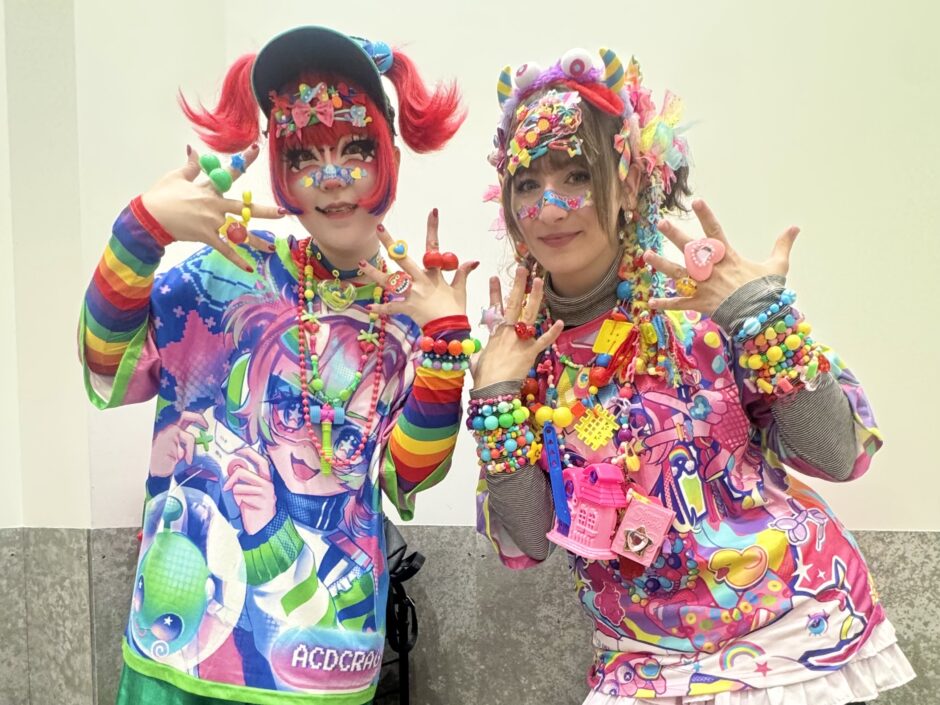
Decora kei is a Japanese street fashion style built around layers of colorful accessories, playful motifs, and personal expression. Closely associated with Harajuku, it brings hair clips, beads, character accessories, and bright clothing together in combinations chosen by the wearer.
In this guide, we’ll cover what decora means, its history, how to build a look from head to toe, and where to shop in Tokyo and online. You can start with clothes you already own. Visiting Tokyo? We also explain a guided Harajuku experience that lets you borrow selected items without buying a whole new wardrobe.
What Is Decora Kei?
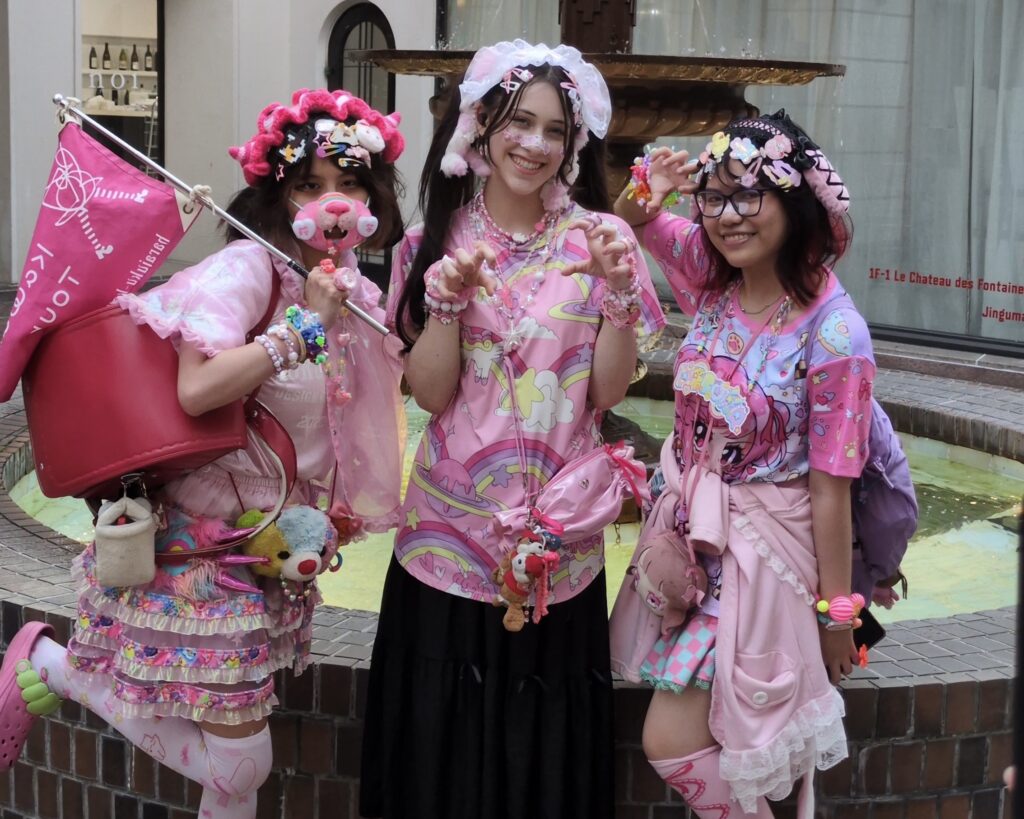
The name “decora” is associated with the English words “decoration” and “decorative.” In Japanese, デコラ系 is roughly pronounced deh-koh-rah keh-ee, with short, even syllables. “Kei” (系) means a style or category in this context. The name points to the central idea: decorating an outfit with layers of accessories.
The clothing might be a graphic tee, a hoodie, a skirt, or trousers; accessories provide much of the visual detail. There is no official checklist or required number of clips. You do not need expensive labels, a particular body shape, Japanese nationality, or a particular gender to explore the style.
Decora is usually personal styling rather than the recreation of a specific fictional character. Character goods can be part of an outfit, but wearing them does not automatically make it cosplay. Start with the colors and objects you enjoy, then decide how much decoration feels comfortable.
The History of Decora Kei
How Decora Emerged in 1990s Harajuku
Decora became visible within the varied street fashions of late-1990s Harajuku. Photographer Shoichi Aoki launched FRUiTS in 1997 to document people creating their own looks on the streets. His account for the DECORA.BOOK project describes a flowering of accessory-heavy outfits around 1998, including casual sportswear covered with colorful plastic accessories.
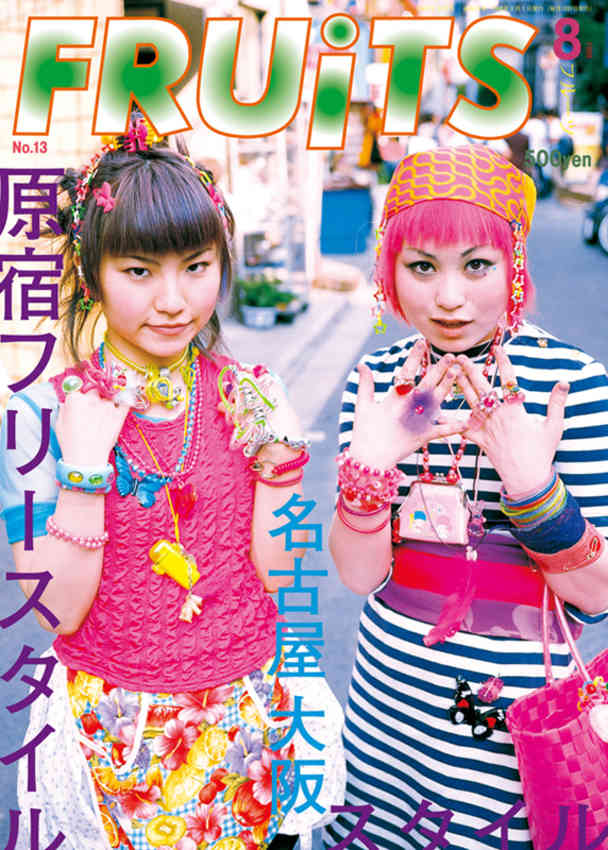
出典:https://motion-gallery.net/projects/decorabook
This gives us a documented period of growth, rather than a precise birthday or a single inventor. Street styles develop through people borrowing, making, and recombining ideas. The evidence does not justify a simple chain from 1980s Tokyo nightclubs through ura-Harajuku to decora. Earlier fashion experimentation provides context, but a direct line of descent should not be assumed.
FRUiTS, 6%DOKIDOKI, and Tomoe Shinohara
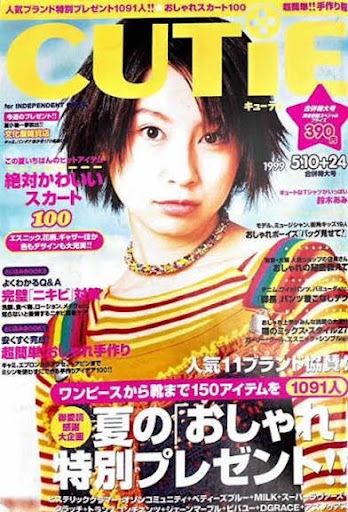
出典:https://x.com/itmecybrgrl/status/1653518434725167104
FRUiTS recorded and circulated decora looks; it did not invent them. The magazine made individual outfits available to readers beyond the street where they were photographed.
出典:https://www.web-across.com/todays/cnsa9a000003y4bm.html
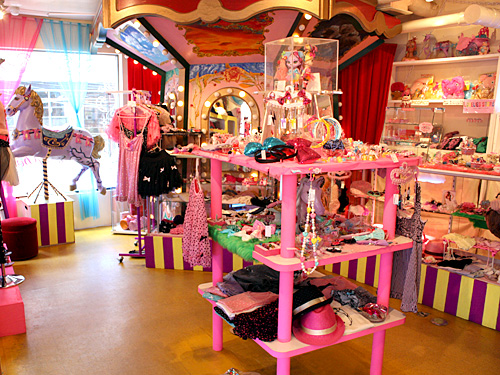
Physical spaces mattered too. In 1995, Sebastian Masuda opened 6%DOKOKI in Harajuku. Its “Sensational Kawaii” concept connects it with the neighborhood’s colorful creative culture, including decora, without making it an exclusively decora brand or the official headquarters of the style.
出典:https://x.com/itmecybrgrl/status/1811436707453059418
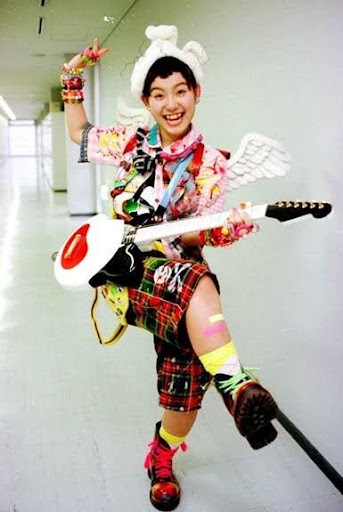
Tomoe Shinohara’s colorful, accessory-heavy styling and the Shinorer phenomenon also belong in this story. Their visual overlap with decora is useful to recognize, but Shinorer and decora are not interchangeable. Accounts differ about influence and origins; Aoki explicitly distinguishes the two. Avoid treating one celebrity, magazine, or shop as the sole source of a shared street style.
Decora in the 2000s and the Neo-Decora Revival
As Harajuku street snaps circulated internationally, more readers encountered these looks. Phaidon’s FRUiTS books, published in 2001 and 2005, brought the photographs to audiences outside Japan. Fashion blogs, online communities, and later social media provided further spaces to share outfits and discuss styling.
出典:https://www.sankei.com/article/20250114-AUPWSBCAHROZHAIX55TA5YI2RQ/
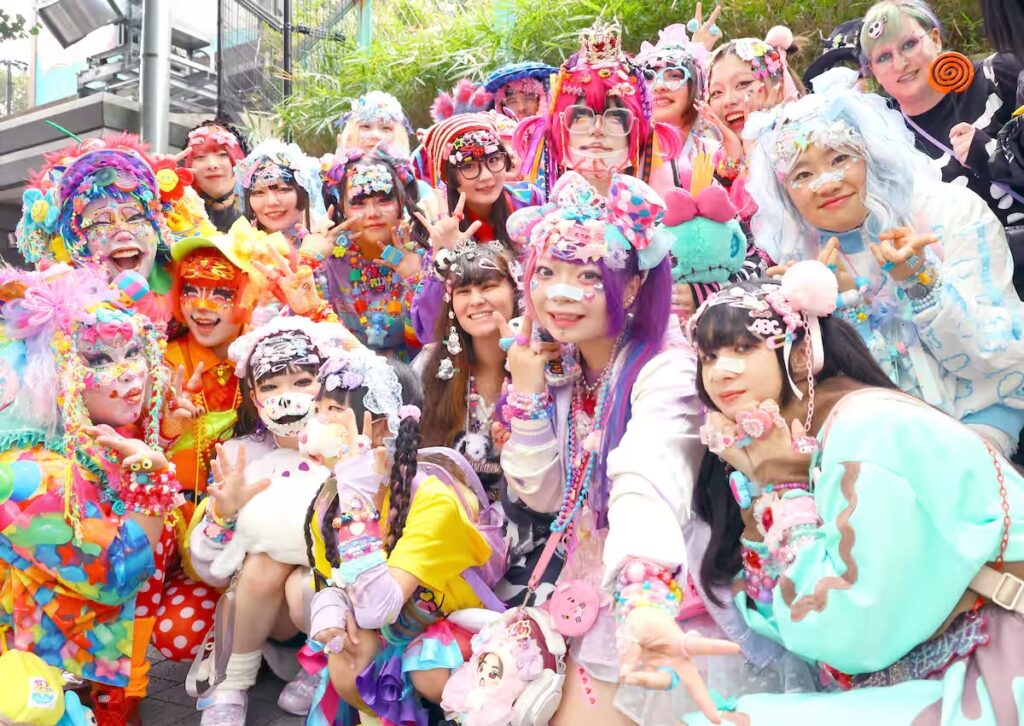
The term “neo decora” is used for some more recent expressions of the style. A January 2025 Sankei report documented a Harajuku gathering and handmade accessories; it is evidence of an active community at that time, not a promise of an event on your travel dates. Today’s styling can draw on saturated, neon, pastel, pink, dark, or character-based palettes without following a single progression from bright to soft colors.
Understanding this history can make a visit to Harajuku more meaningful: look at the details people create, visit shops respectfully, and ask before photographing anyone. The neighborhood is a place where people live and work as well as a destination for fashion discovery.
How to Create a Decora Kei Outfit
出典:https://www.instagram.com/p/C48FB6xLLJj/
Start With a Colorful Base Outfit
A decora outfit can start with a graphic or rainbow-striped T-shirt, a bright skirt, patterned leggings, or a colorful hoodie. Pants and dresses work too. Thrifted and secondhand items can sit comfortably next to new pieces. Choose a base you can move in, and adapt your layers to the season rather than copying a photograph exactly.
Layer Accessories From Head to Toe
Build outward from one focal point. Repeat a color from your shirt in hair clips, then add a necklace or bracelets. Carry that theme onto a bag, socks, or shoes if you wish. Check the result in a mirror and move around: decoration should not block your vision or make walking uncomfortable.
Easy Decora Outfit Ideas for Beginners
Try a pink-and-blue T-shirt with jeans, a few matching clips, and beaded bracelets. For a character theme, pair a favorite graphic top with charms in its colors. Or decorate a plain hoodie and backpack with removable pins. Repeating one or two details gives a small collection a sense of connection.
Start Small or Build a Full Decora Look
A lighter look is useful for testing what you enjoy wearing. Add more clips, necklaces, or decorated layers as you become comfortable with them. “Light,” “casual,” and “full” describe degrees of styling, not levels you must pass. A densely decorated outfit takes more preparation, but it does not make its wearer more entitled to participate.
Buy, DIY, or Borrow a Decora Outfit
Buying lets you keep and reuse pieces. DIY gives you control over colors and motifs, using materials you already have or can obtain cheaply. Borrowing selected items during a guided experience can reduce what you need to purchase and pack. Later in this guide, we explain the Harajuku Kawaii Tour option and what you still need to bring.
Essential Decora Kei Accessories
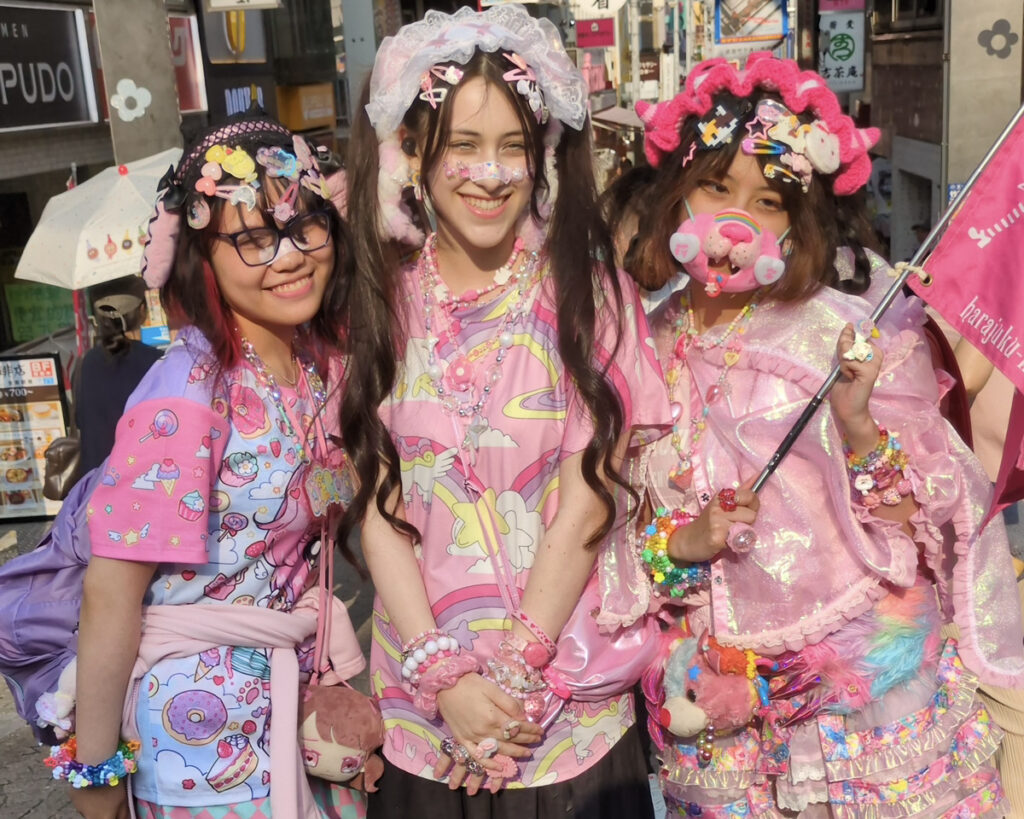
Accessories provide much of the detail in decora fashion. The categories below are useful possibilities, not a compulsory shopping list. Choose pieces that feel comfortable and work with the things you already own.
Hair Clips, Bows, and Hair Accessories
Hair clips and bows can be worn in clusters, with repeated stars, hearts, or colors. Begin with lightweight pieces and distribute them so they do not pull on your hair. You can decorate a hat or hairband if clips do not suit your hair length or texture.
Bracelets, Necklaces, Beads, and Rings
Plastic and bead necklaces can be layered in different lengths, mixing colors and sizes. Bracelets and rings let you repeat the same theme lower down the outfit. Leave enough room for comfortable movement, and check that clasps and elastic are secure before heading out.
Face Stickers, Badges, and Character Charms
Pins and badges work on clothing or bags; character charms can add a favorite motif. For your face, choose products specifically intended for skin and follow their instructions. Ordinary craft stickers are not interchangeable with cosmetic face stickers. A small detail can connect the face area with the rest of the outfit.
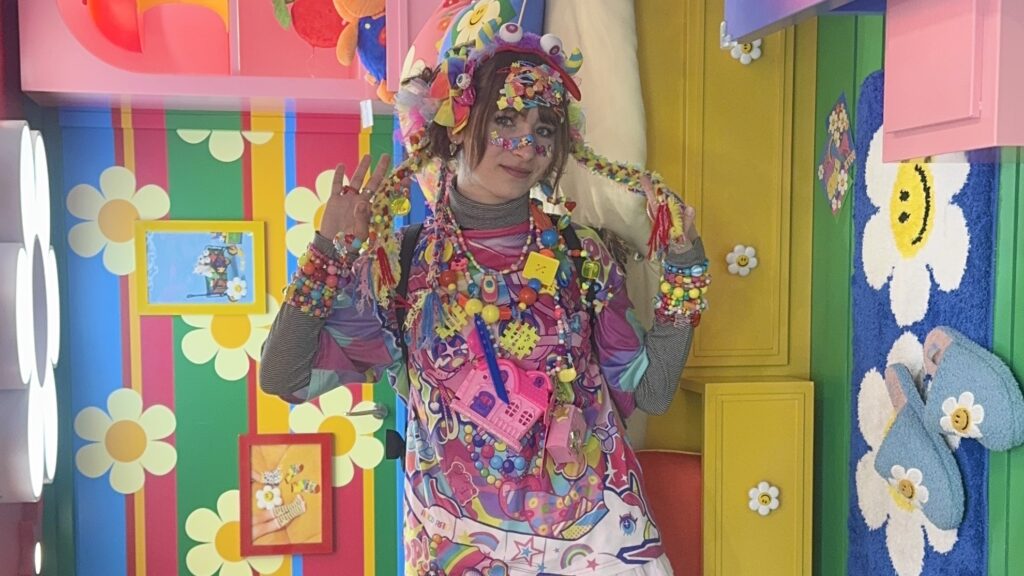
Bags, Backpacks, and Keychains
Use a bag you can carry comfortably, then attach a few charms or keychains securely. A character bag can also be the focal point. In crowded streets, keep long dangling decorations close and protect fragile pieces. Leave space for practical essentials instead of filling the entire bag with ornaments.
DIY Decora Accessories on a Budget
Candy, stars, hearts, and character motifs can inspire simple bead bracelets or decorated clips. Reuse ribbons and small ornaments where suitable, and keep glue or sharp edges away from skin. Personality and combinations matter more than expensive materials; affordability is one option, not a rule that every item must be cheap.
Decora Kei Shoes, Hair, Makeup, and Nails
Sneakers, Platform Shoes, and Leg Warmers
出典:https://item.rakuten.co.jp/acdcrag/lp-001-61/
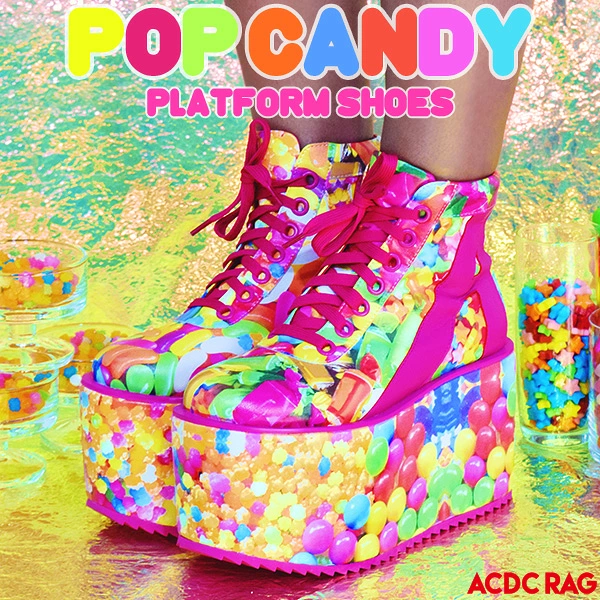
Bright sneakers, chunky shoes, and patterned leg warmers can complement a decora outfit. Platforms are optional. If you will be walking around Harajuku, choose footwear you have already worn comfortably. Socks or leg warmers can add color without height; keep loose layers clear of the ground and choose them for the weather.
Hair, Wigs, and Colorful Hairstyles
Clips and bows work with natural hair colors as well as dyed hair or wigs. Pigtails and braids offer places to attach decorations, but short hair can work equally well. A wig changes the color palette without dyeing; it is an optional styling choice, not a requirement.
Makeup, Glitter, and Face Stickers
出典:https://www.instagram.com/p/CyQfUopL1fy/
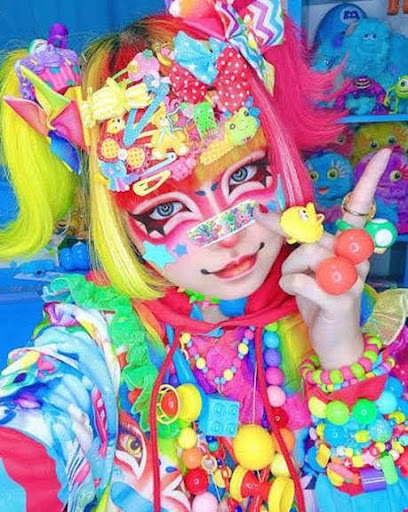
There is no fixed decora makeup rule. Colorful eyeshadow, glitter, face stickers, and drawn-on hearts or stars are possible additions; understated makeup or no makeup can leave the accessories as the focus. Heavy blush, under-eye makeup, and colored contact lenses are not always required.
Use products intended for the area where you apply them, especially around the eyes. Follow product directions and avoid anything that irritates your skin. For a booked makeover, ask what will be applied and whether you can decline particular products. Bring up sensitivities before the appointment.
Decora-Inspired Nails
Repeat outfit colors with polish, dots, or simple stickers designed for nails. Short nails can carry the same theme as elaborate nail art. Choose something that still lets you use your phone, handle bags, and enjoy the rest of your trip.
Types of Decora Kei
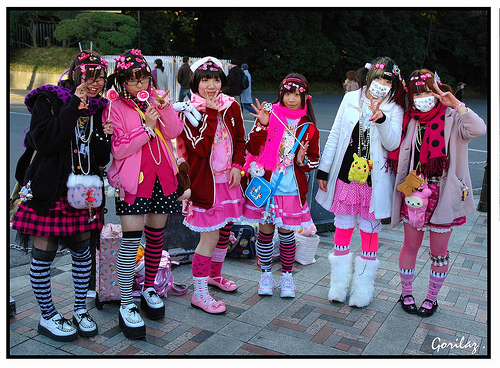
出典:https://kingscliffdesignhistory.wordpress.com/2013/03/01/sub-culture-decora/
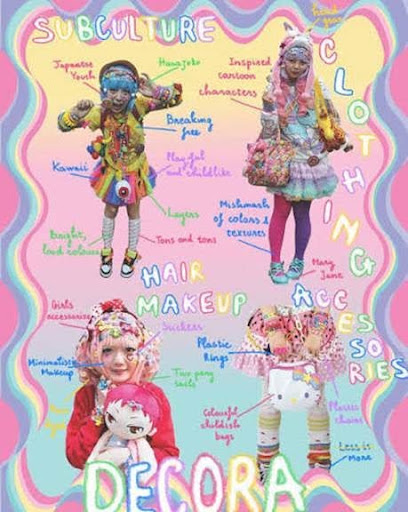
These are descriptive labels you may encounter, not official or mutually exclusive categories. Use them as ideas for styling rather than tests of authenticity.
Classic decora: a reference to the accessory-heavy looks associated with earlier street photographs. Pastel or pink decora: a color-led description. Dark decora: darker palettes or motifs combined with layered decoration. Casual or light decora: fewer accessories or a simpler everyday base. Neo decora: a term for some newer interpretations and communities, not one prescribed outfit.
Brands to Explore for Decora Kei Outfits
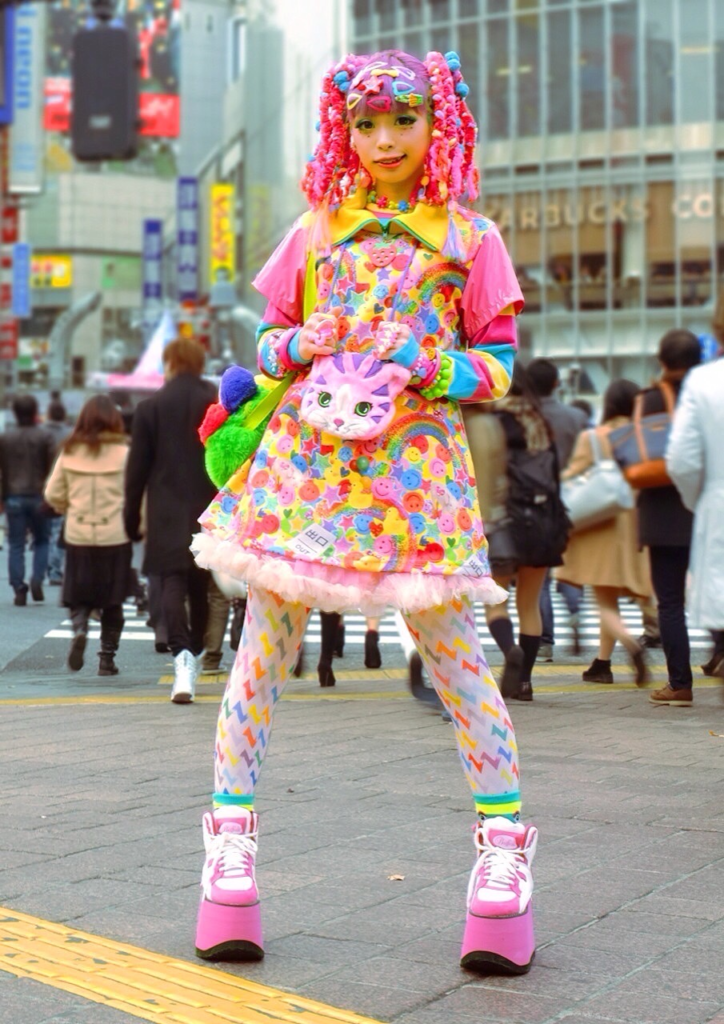
出典:https://journal.media-culture.org.au/index.php/mcjournal/article/view/2926
Decora fashion is not a one-brand style. Use these names as places to explore particular items, then combine them with your own clothes. Product availability changes, and none of these brands is a requirement for wearing decora.
6%DOKIDOKI
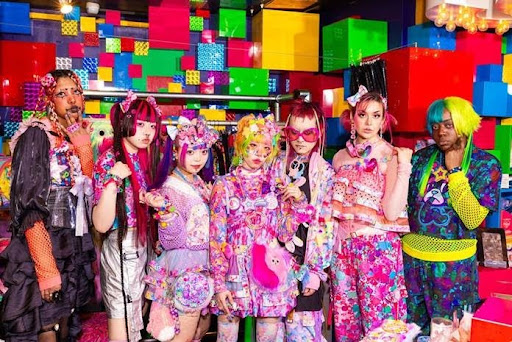
One of the best-known names associated with Harajuku kawaii culture, 6%DOKIDOKI offers original and selected clothing and accessories under its “Sensational Kawaii” concept. It can be a useful starting point when you want a distinctive colorful piece to build around. For a first purchase, consider how an accessory would fit with clothes you already own rather than feeling obliged to buy a whole look. Its official website provides the Harajuku shop’s access details and a link to the web shop; check those before making a special visit.
ACDC RAG
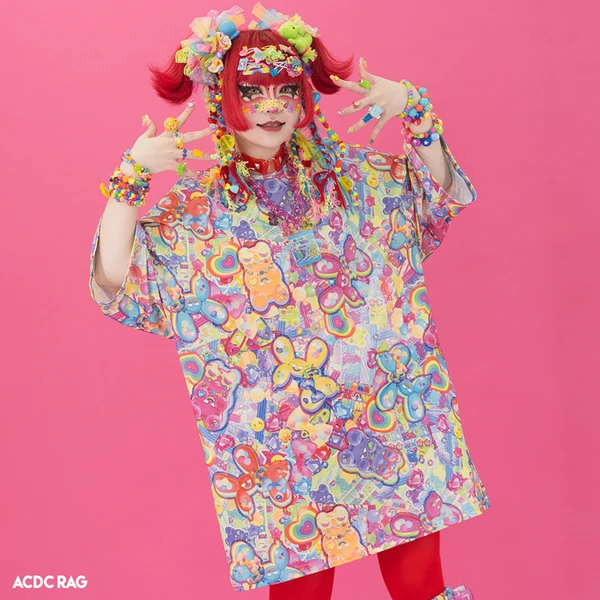
出典:https://acdcrag.com/products/pe-030-005-decolove-huge-t-shirt
ACDC RAG offers graphic clothing and accessories through its official shop and Harajuku stores. A printed T-shirt or roomy top can provide a base for clips, necklaces, and a character bag. Choose the print first, then pull one or two colors from it for smaller items. Compare the actual garment measurements with a top you own, especially for oversized cuts. The official site lists its main store and Wharf Harajuku store; check the current shop information and item availability when planning your route.
minacute
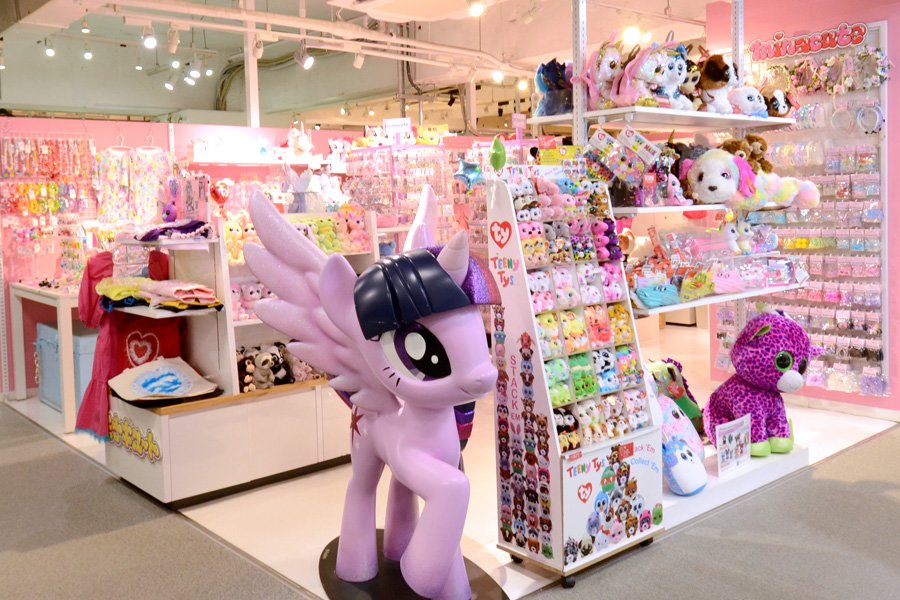
出典:https://www.laforet.ne.jp/shop_search/shop498
minacute’s Laforet Harajuku store describes a “BORDERLESS KAWAII” accessories concept and items including necklaces, rings, and hair accessories. This makes it a place to browse smaller additions rather than replace your wardrobe. Look for a repeated color or motif across a few pieces you can wear together. The Laforet listing places the shop on B1.5F and links its social account. Check the latest selection before expecting a particular character or item, and ask about fit or materials where those affect your choice.
https://www.instagram.com/minacute_japan/
YOSUKE
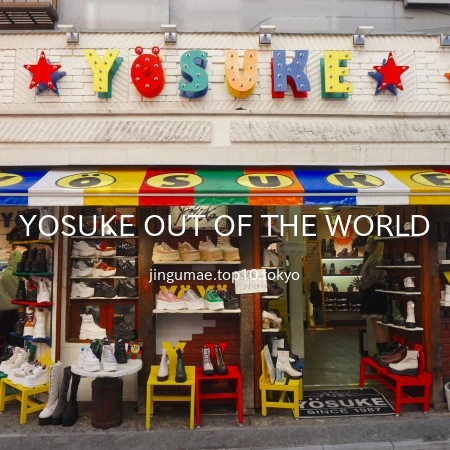
出典:https://jingumae.top10.tokyo/category/7
YOSUKE’s official online store organizes shoes by type, color, and heel height, including sneakers and boots. Those filters can help you compare footwear for a colorful outfit without assuming the tallest platform is the best choice. Consider weight, fit, and how far you expect to walk; a photo cannot tell you how a shoe feels. Confirm measurements and the applicable return or exchange conditions before ordering. The shop is a footwear source to explore, not evidence that decora requires a particular shoe brand.
Where to Buy Decora Kei Fashion
Shops in Harajuku and Tokyo
For a Harajuku shopping route, the official listings place 6%DOKIDOKI at 4-28-16 Jingumae, TX101 Building 2F; ACDC RAG lists its main shop at 1-16-7 Jingumae. Laforet Harajuku lists minacute on B1.5F and NILE PERCH on 1.5F. These are possible independent stops, not a guaranteed tour itinerary.
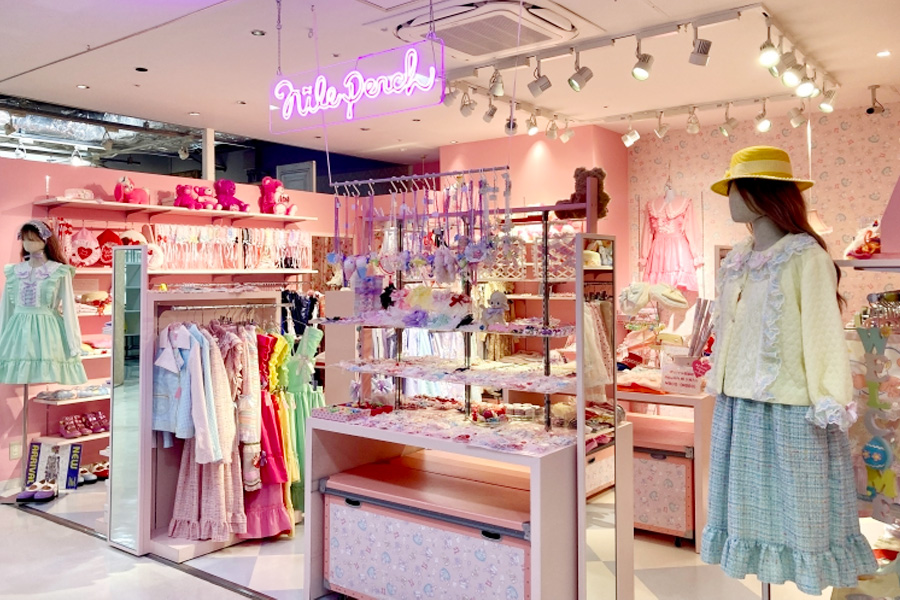
出典:https://www.laforet.ne.jp/shop_search/shop10
NILE PERCH’s listing products includes clothing, bags, hair accessories, and other small goods. Browse for pieces that suit your palette rather than assuming everything in a kawaii shop is specifically decora.
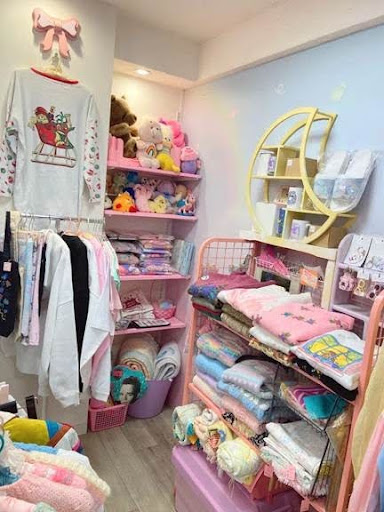
出典:https://nakano.keizai.biz/photoflash/3593/
Spank! is a separate stop in Nakano, not Harajuku: its official shop information lists Nakano Broadway B1 and describes handmade goods and American vintage items. Allow separate travel time if you want to include it.
Online Stores and Marketplaces
Start with official brand links, then compare independent sellers or marketplace listings carefully. Check measurements, shipping destinations, delivery time, import charges, and returns before paying. Spank!’s official store states domestic shipping only, so overseas readers should not assume every Japanese web shop delivers internationally.
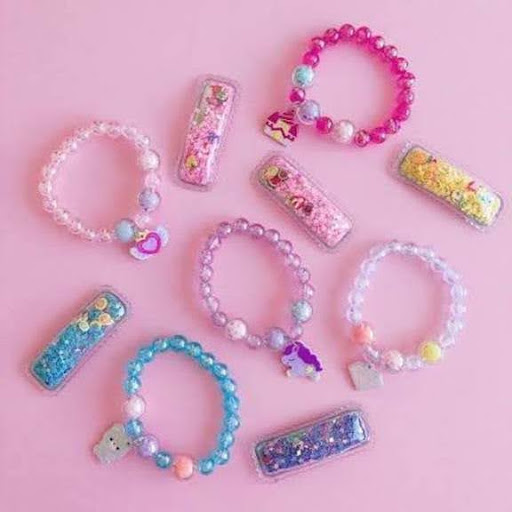
Thrift Stores and 100-Yen Shops
出典:https://www.instagram.com/p/CjFAWIrLn1s/
Secondhand shops can provide a colorful base or an unusual accessory. Daiso and Can Do are also places to look for small accessories or craft materials, depending on the branch and stock. Check the actual price label: the category name “100-yen shop” does not mean every product has the same price.
Shopping Tips for International Visitors
Set a budget and luggage limit before browsing. Measure clothes rather than relying only on size letters, and ask before trying items on or photographing displays. Check each shop’s official website or social account for its latest location and opening hours. Tax-free eligibility and shipping arrangements vary; confirm them with the seller.
Decora Kei, Anime, and Character Culture
出典:https://www.instagram.com/p/CmTmcKJPW6k/
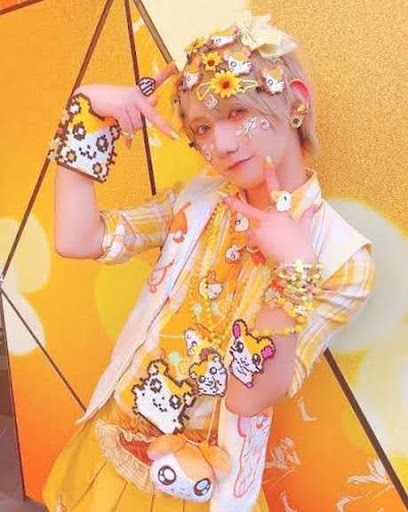
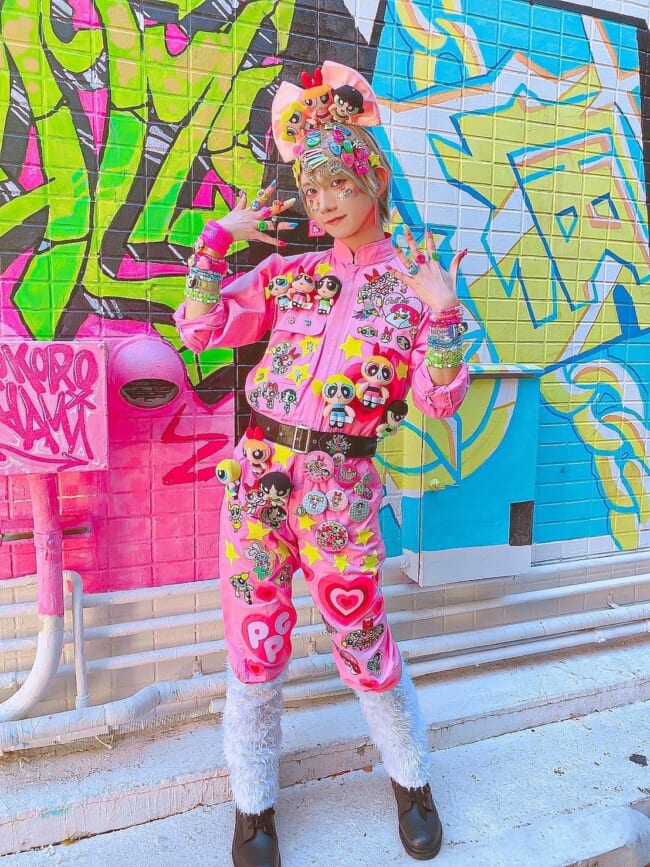
Decora’s bright colors and playful motifs can work well with anime and character goods. Try a graphic tee, plush charm, or small toy inspired by a favorite character, then build a palette around it. Magical-girl stars, hearts, and transformation-item imagery can also suggest combinations without requiring a complete costume.
出典:https://harajuku-pop.com/68661/
This is a styling connection, not proof that one series created decora. You might reference a character while combining pieces in your own way. Reproducing a specific character’s outfit is a different intention from assembling a personal decora look, although an individual can enjoy both approaches.
Can Men and People of Any Gender Wear Decora?
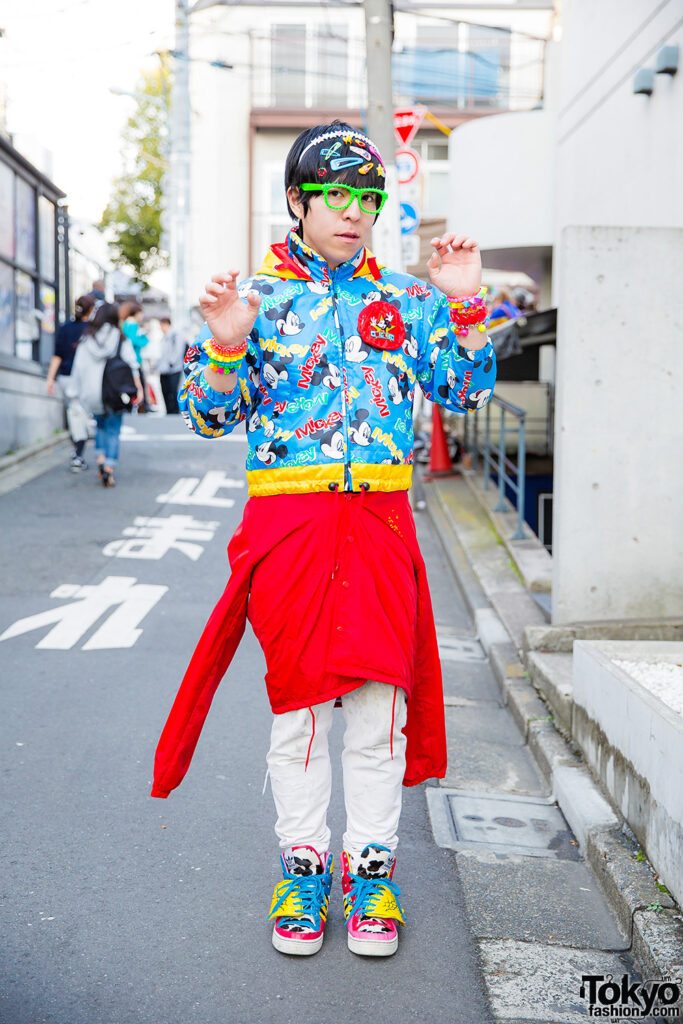
Yes. Decora styling does not depend on a feminine silhouette. Men and people of any gender can use layered accessories, bright colors, and playful motifs with trousers, shorts, hoodies, skirts, or dresses. Street photographs document male wearers, but they do not establish a reliable gender ratio for the community.
Choose a combination that suits your body, comfort, and interests. The same applies to nationality: you do not need to be Japanese to explore the style. Be considerate of other wearers and avoid treating people in Harajuku as props for your photographs.
Decora Kei vs. Other Japanese Fashion Styles
These comparisons describe common visual priorities, not rigid borders. Each style has varied across periods and substyles, and individual outfits can combine influences.
Decora Kei vs. Fairy Kei
Fairy kei is associated with soft pastel palettes and nostalgic toy-like imagery. Decora puts particular emphasis on layered decoration. An outfit can share both features, so pastel colors alone do not settle the label.
Decora Kei vs. Gyaru
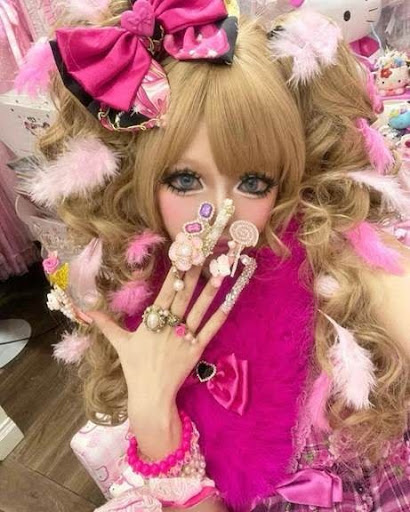
Gyaru places strong emphasis on hair, makeup, nails, and fashion-conscious self-expression, with substantial variation between substyles. Tanned skin and bleached hair describe some looks, not all gyaru. Compare the whole outfit rather than using one feature as a definition.
| Decora Kei | Gyaru | |
| Main focus | Layered decoration and personal combinations | Hair, makeup, nails, and coordinated styling |
| Color palette | Bright, pastel, dark, or mixed palettes | Varies with period, substyle, and individual outfit |
| Accessories | Clips, beads, charms, and badges | Jewelry and accessories coordinated with the overall look |
| Expression | Playful decoration and character motifs | Glamorous or fashion-conscious self-expression |
| Context | Associated with Harajuku street fashion | Often associated with Shibuya; multiple substyles |
Decora Kei vs. Lolita Fashion
Lolita fashion often builds around a coordinated dress or skirt silhouette, with attention to garment shape and matching details. Decora centers more on accumulated accessories across an outfit. Decorative overlap exists, but a frilled dress alone does not make a look lolita or decora.
Makeover Decora in Harajuku Without Buying a Full Outfit
Putting together a full outfit can take time and luggage space. If you would rather try selected pieces during your trip, our Harajuku Kawaii Tour offers a guided decora makeover experience with artist ZO-NI. It is one way to explore the neighborhood, alongside shopping independently or wearing your own creations.
What to Expect from the Harajuku Kawaii Tour
View this post on Instagram
The plan includes styling, a borrowed T-shirt and accessories, and a guided Harajuku walk before you return to change back. Bring your own bottoms, shoes, and socks. Size matching is needed only for the T-shirt; the other rental items have no specific size restrictions. Ask about T-shirt fit before booking. You can decline face stickers or makeup.
At the time of checking, the plan lists weekdays only, two hours for one person or three hours for two, and ¥39,800 per person including tax. Food and drinks are excluded. Optional eye makeup costs ¥8,000 extra and adds time. Confirm the final schedule and total when reserving through the plan page.
Planning for a Teen or Family Visit?
For a family visit, note the accompaniment and booking arrangements below. The minimum age for the decora makeover is 6.
Participants aged 6–17 must be accompanied by an adult aged 18 or over, with no additional accompaniment conditions. Parents can join without a makeover or changing clothes. They must book in advance and pay the same rate as the regular tour without the decora makeover.
Meet at the Takeshita Exit of JR Harajuku Station. As this is a private tour, the walking distance depends on your preferences and the itinerary. Size matching is needed only for the rental T-shirt; other rental items have no specific size restrictions. You can decline face stickers or makeup.
The cancellation policy applies to this experience; review it before booking. In rain or severe weather, the tour may proceed, change route, be rescheduled, or be cancelled, depending on the circumstances. Updates are sent by email, social-media direct message, or a similar contact method. We can take photos using your device. With your permission, we may also take photos or videos using our devices and post them on social media.
Frequently Asked Questions
Do I Need Special Brands or a Set Number of Accessories?
No. Start with pieces you enjoy and can wear comfortably. The suggestions above are ways to experiment, not a required shopping list or a minimum accessory count.
Do I Need to Bring My Own Outfit for the Tour?
You need some of your own clothing. See the rental and bring-your-own details above, and confirm fit before booking rather than assuming the experience supplies a complete outfit.
Can Teenagers Join, and Does a Parent Need to Attend?
The decora makeover experience is open to participants aged 6 and over. Those aged 6–17 must be accompanied by an adult aged 18 or over. No additional accompaniment conditions apply.
Can Parents Join Without Dressing Up?
Yes. Parents can accompany participants without a makeover or changing clothes. Accompanying parents must book in advance and pay the same rate as the regular tour without the makeover.
Is the Tour Available in English?
Yes. The decora experience is available in English, including communication during styling. Available dates depend on the stylist’s schedule; confirm availability when booking.
What Happens If It Rains?
Depending on the rain or severe-weather conditions, the tour may proceed, change route, be rescheduled, or be cancelled. We contact guests by email, social-media direct message, or a similar contact method. The cancellation policy applies; review it before booking.
Final Thoughts
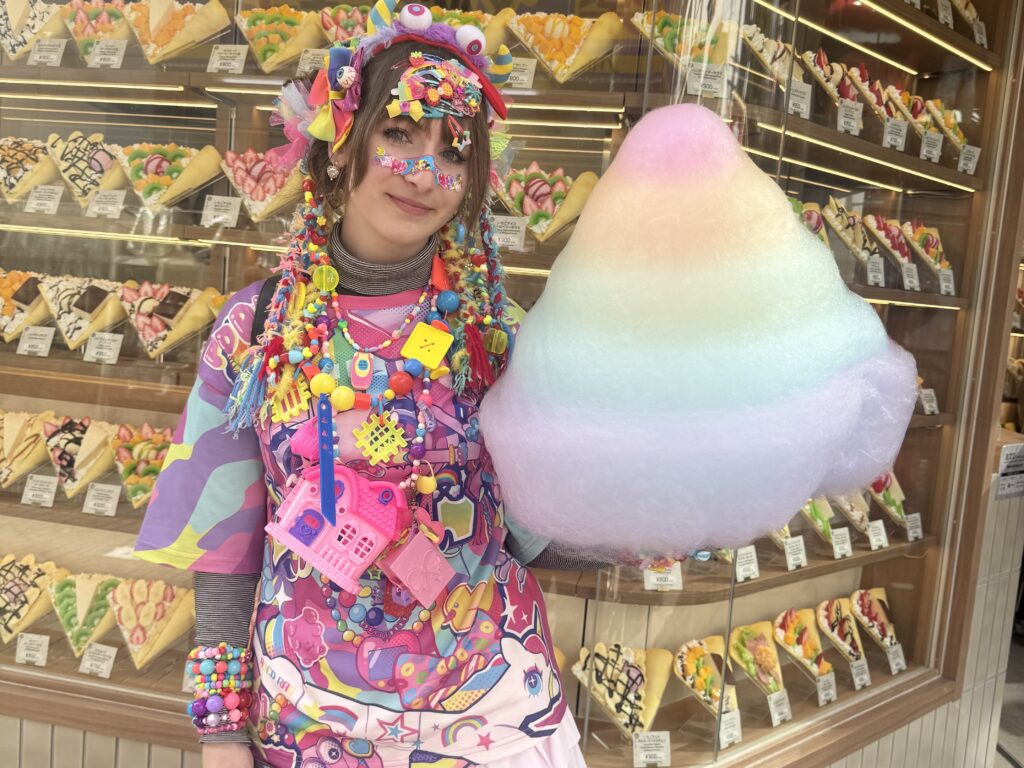
Decora kei is a way to enjoy color, accessories, layering, and personal expression. Start with a few clips or bracelets, then build a collection at your own pace. Buying and DIY both let you develop a look around things you enjoy.
If you are visiting Tokyo, borrowing selected items during a guided Harajuku experience is another option. View the Harajuku Kawaii Tour plan for its itinerary, rental details, prices, and booking information; confirm available dates, age requirements, and any outstanding family conditions with the operator before reserving.

コメントを残す